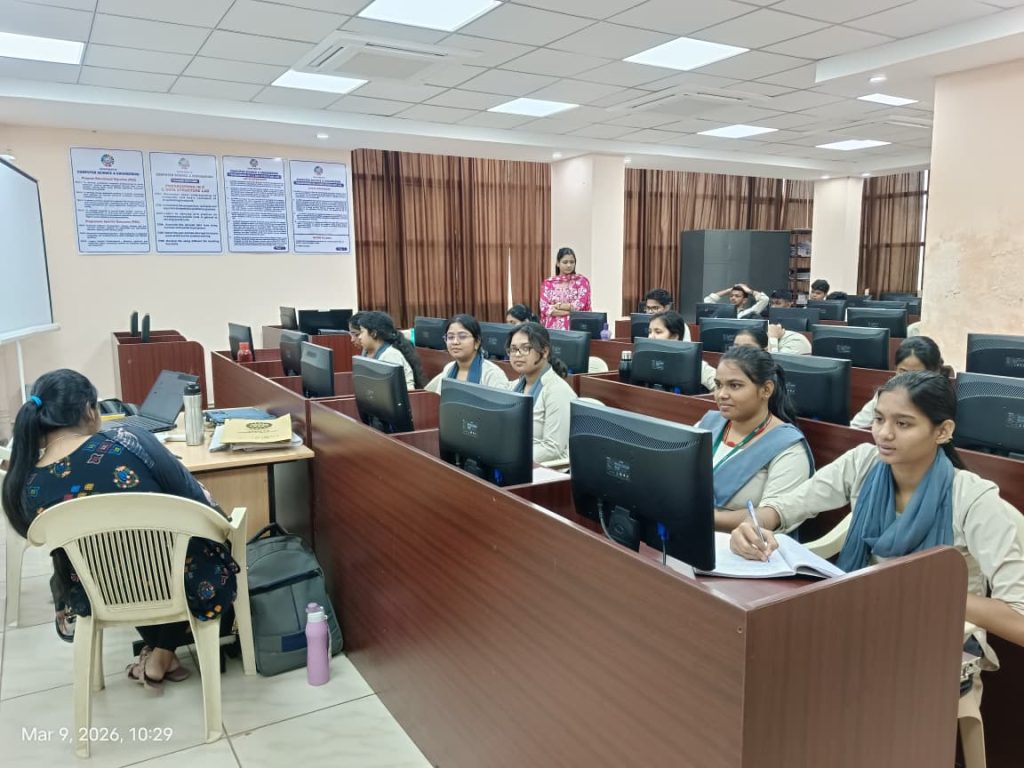
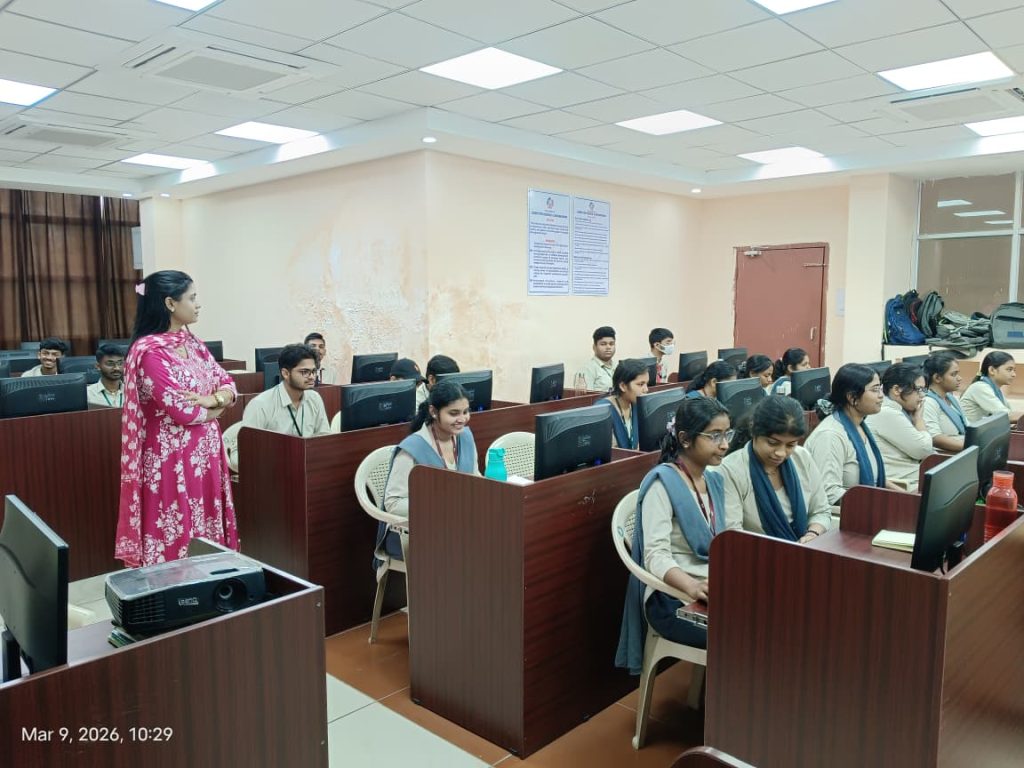
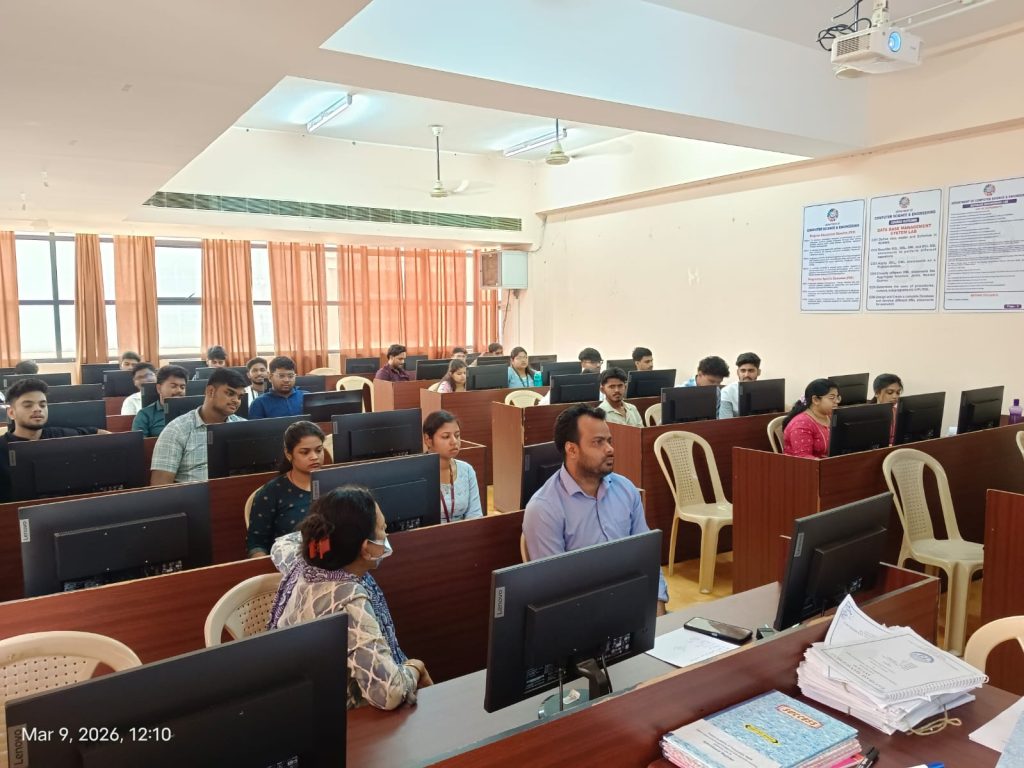
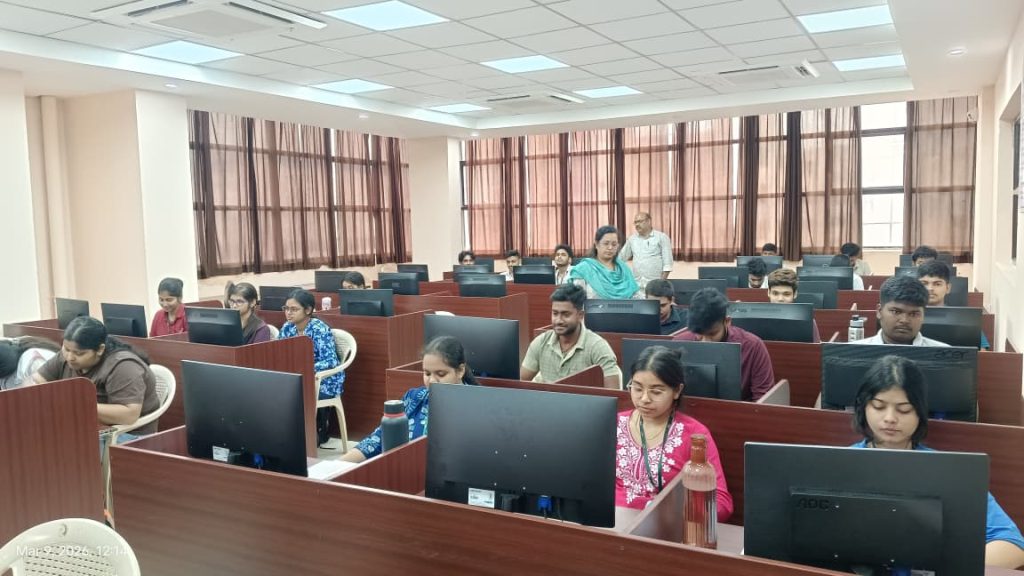
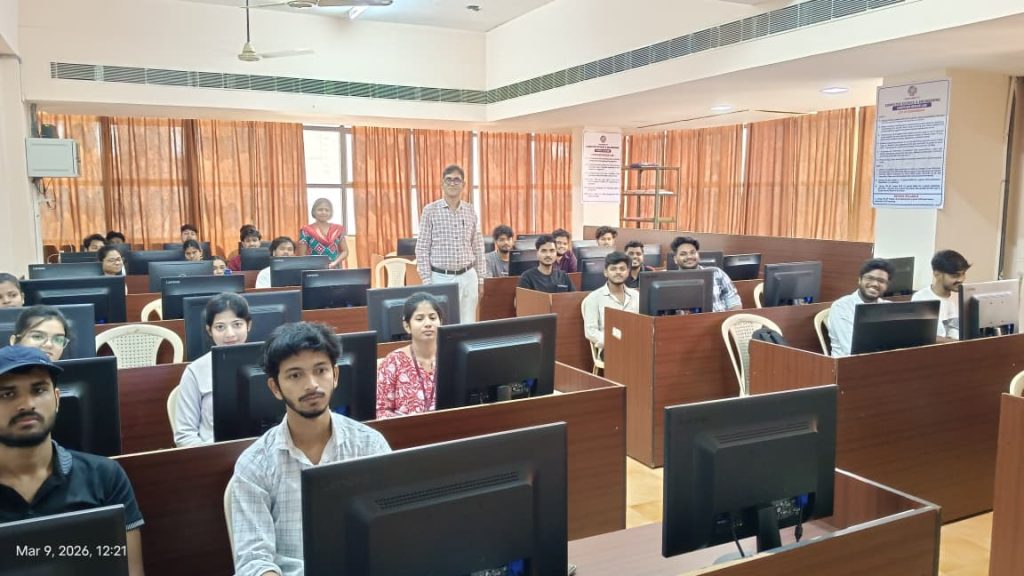
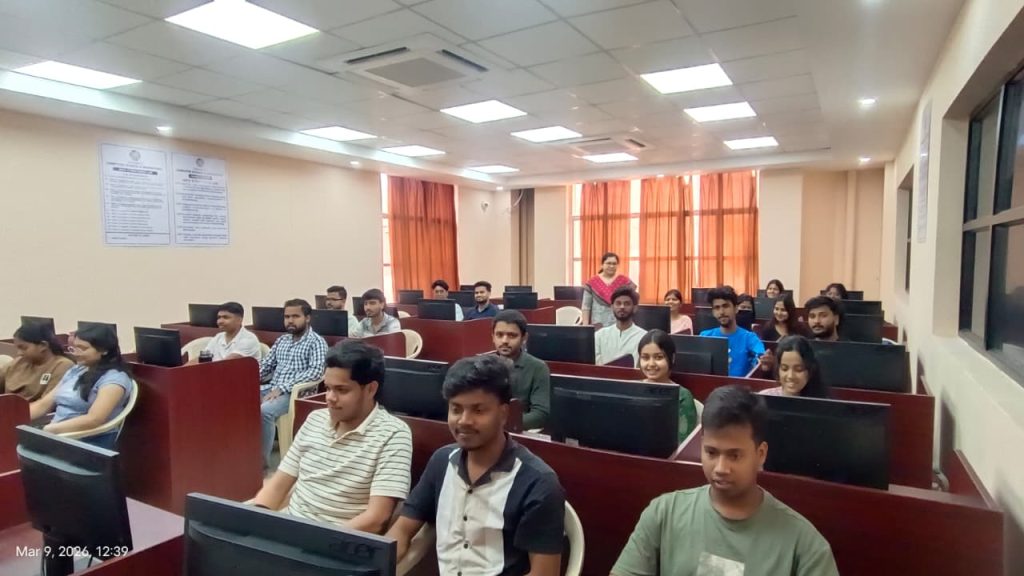
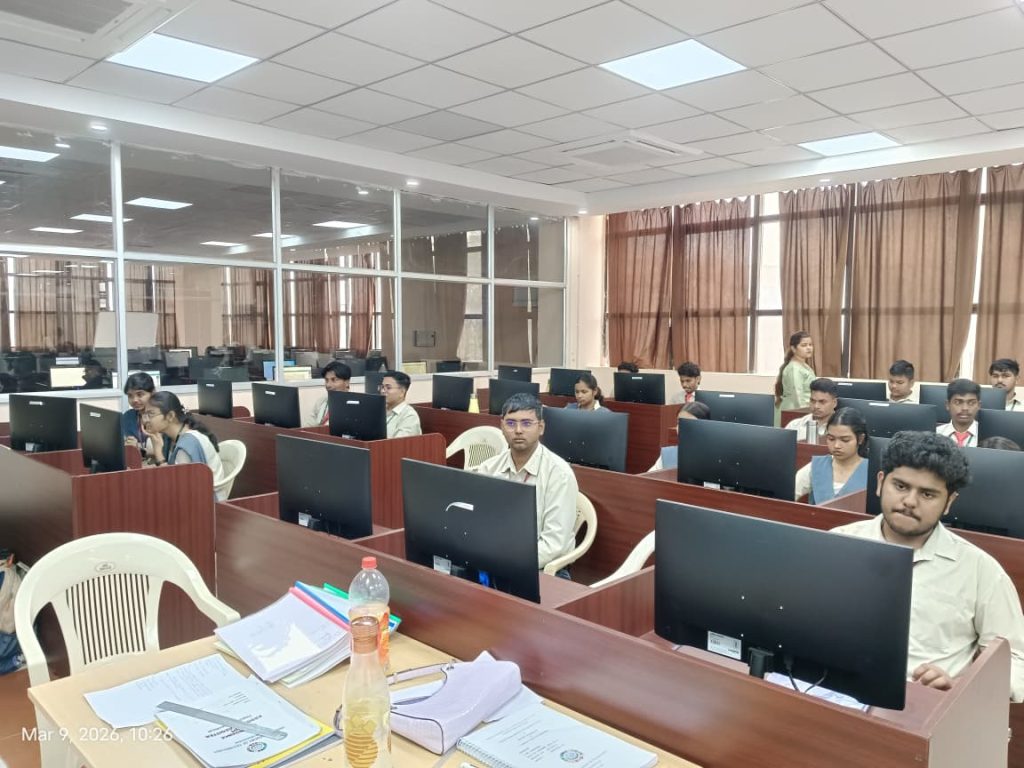
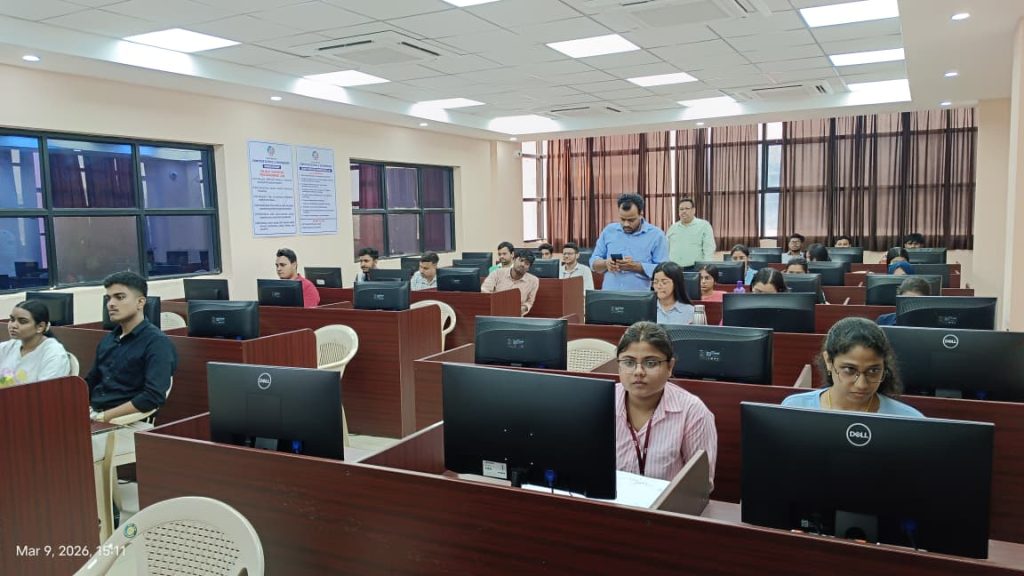
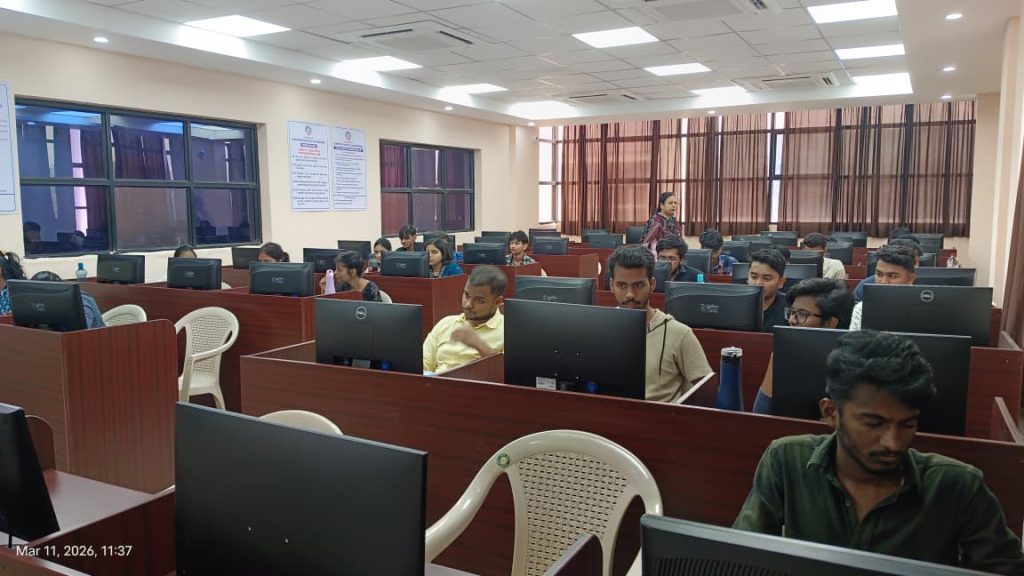
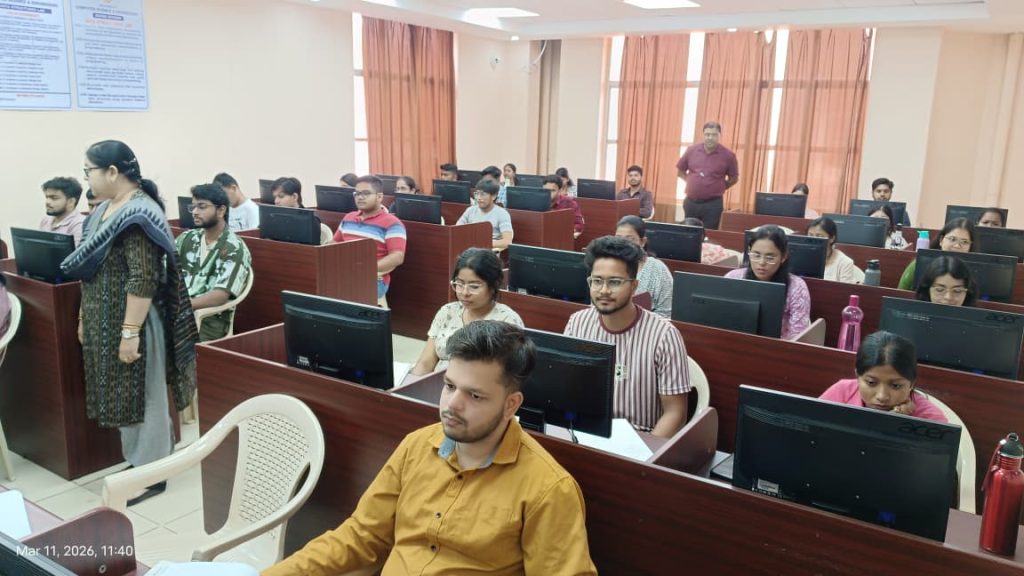
Programming Lab

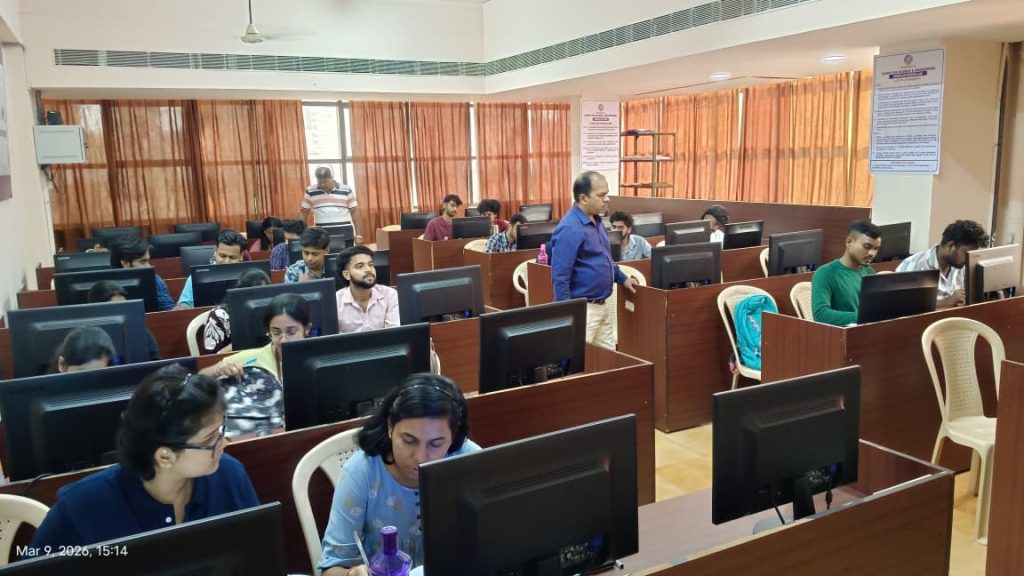
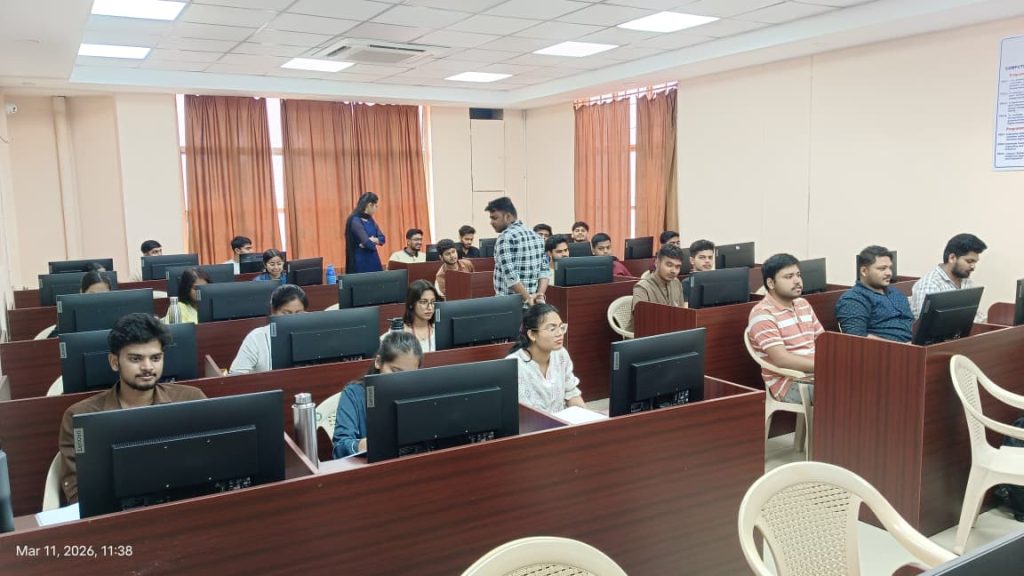
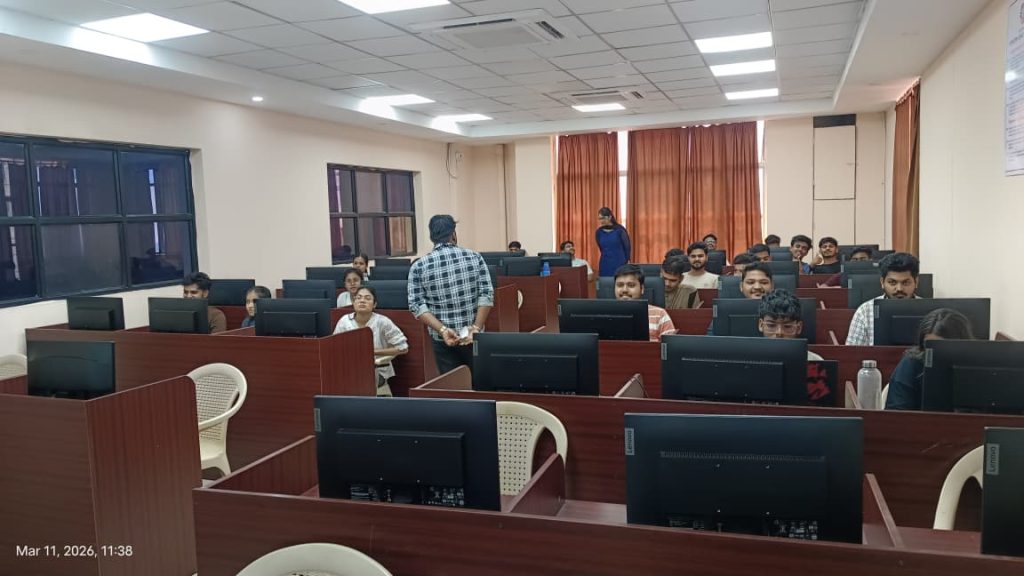
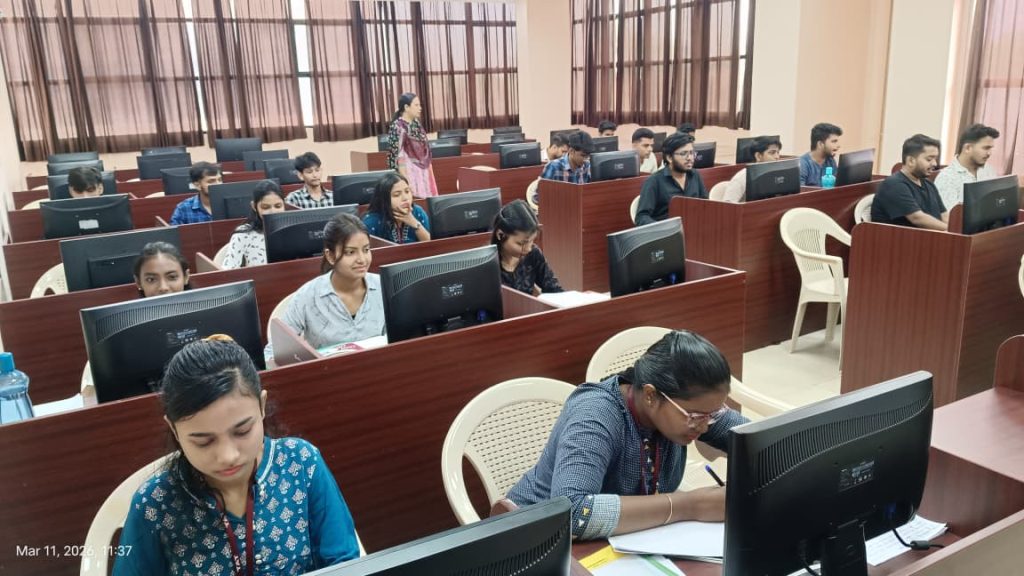
Equipments / Configurations

  • Processor : Intel(R) Core(TM) i3-10100 CPU @ 3.60GHz
  • RAM : 8 GB
  • Storage : 256 GB SSD
  • Monitor : 18” TFT

Software Used

  • Dev C++ IDE
  • Code::Blocks IDE
  • Windows 10 Education Operating System

List of Experiments

Experiment Set 1

  1. Write a program to print your Bio-data.
  2. Write a program in C to test the arithmetic operators.
  3. Write a program to find Simple Interest and Compound Interest.

Experiment Set 2

  1. Test logical, bitwise, unary and ternary operators.
  2. Check whether a given year is a leap year.
  3. Calculate salary statement of an employee using basic pay, DA, HRA and TA.

Experiment Set 3

  1. Enter marks of 4 subjects and calculate Total, Aggregate %, and Grade.
  2. Display the day of the week using switch case.
  3. Menu driven program to find total, average, smallest and largest.

Experiment Set 4

  1. Check whether a number is palindrome.
  2. Generate prime numbers between two numbers.
  3. Print a pyramid star pattern.

Experiment Set 5

  1. Find largest, smallest, sum and average of an array.
  2. Sort an array in ascending order.
  3. Insert an element in an array at a desired position.

Experiment Set 6

  1. Swap two variables using function.
  2. Print Fibonacci series using function.
  3. Multiply two matrices using functions.

Experiment Set 7

  1. Find GCD using recursion.
  2. Store and display student data using structure.
  3. Check string palindrome using pointer.

Experiment Set 8

  1. Find smallest element and position using pointer.
  2. Implement realloc() and free().
  3. Demonstrate Dynamic Memory Allocation.

Experiment Set 9

  1. Implement Linked List insertion and deletion.
  2. Implement Stack Push and Pop.
  3. Implement Queue insertion and deletion.

Experiment Set 10

  1. Implement Quick Sort.
  2. Implement Linear Search.
  3. Implement Binary Search.

Data Structures Lab

Equipments / Configurations

  • Processor : Intel(R) Core(TM) i3-10100 CPU @ 3.60GHz
  • RAM : 8 GB
  • Storage : 256 GB SSD
  • Monitor : 18” TFT

Software Used

  • Dev C++ IDE
  • Code::Blocks IDE
  • Windows 10 Education Operating System

List of Experiments

  1. Write a C program to implement a Sparse Matrix.
  2. Create a Stack using an Array and perform PUSH, POP and Traversal operations.
  3. Create a Queue using an Array and perform Insertion, Deletion and Traversal.
  4. Perform Creation, Insertion, Deletion and Traversal on a Single Linked List using functions.
  5. Perform Creation, Insertion, Deletion and Traversal on a Doubly Linked List using functions.
  6. Perform Creation, Insertion and Deletion operations on a Binary Tree.
  7. Write a C program to perform Bubble Sort.
  8. Write a C program to perform Insertion Sort.
  9. Write a C program to perform Selection Sort.
  10. Write a C program to perform Quick Sort.
  11. Write a C program to perform Merge Sort.
  12. Write a C program to implement Linear Search.
  13. Write a C program to implement Binary Search.

Object Oriented Programming Lab

System Configuration

  • Processor : Intel(R) Core(TM) i3-10100 CPU @ 3.60GHz
  • RAM : 8 GB
  • Storage : 256 GB SSD
  • Monitor : 18” TFT

Required Software

  • Java Development Kit (JDK)
  • NetBeans IDE / Eclipse IDE
  • Apache Tomcat (for Applet / Web support if required)
  • Windows 10 Education Operating System

List of Experiments

  1. Write a Java program to print “Hello World!”.
  2. Write a program to demonstrate data types, variables, operators, arrays, and control structures.
  3. Write a program to define a class and constructors and demonstrate constructor usage.
  4. Write a program to define class, methods, and objects and demonstrate method overloading.
  5. Write a program to demonstrate inheritance and method overriding.
  6. Write a program to demonstrate Packages in Java.
  7. Write a program to demonstrate Exception Handling.
  8. Write a program to demonstrate Multithreading.
  9. Write a program to demonstrate Applet structure and event handling.
  10. Write a program to demonstrate different Layout Managers in Java.

Web and Application Development Lab

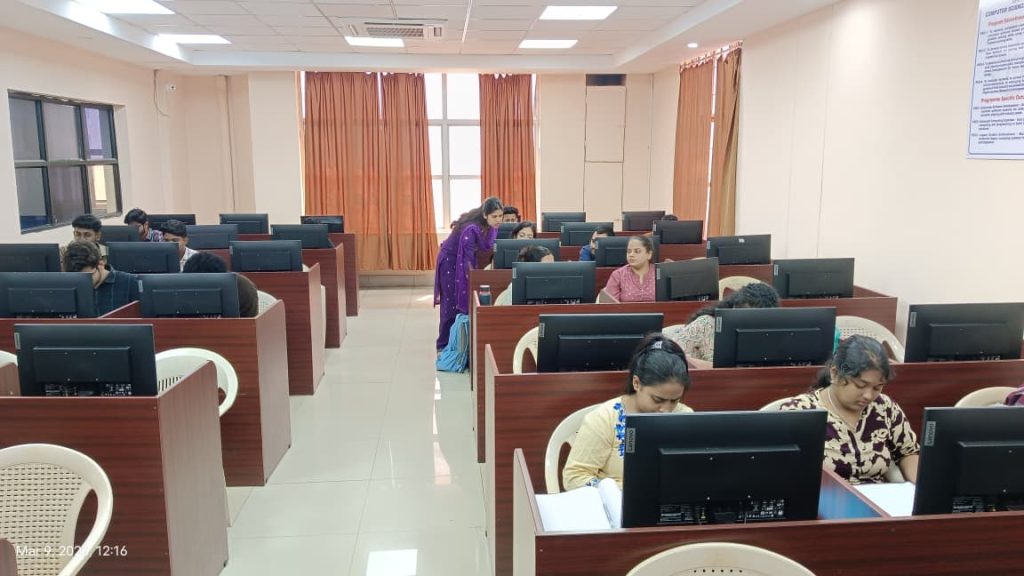
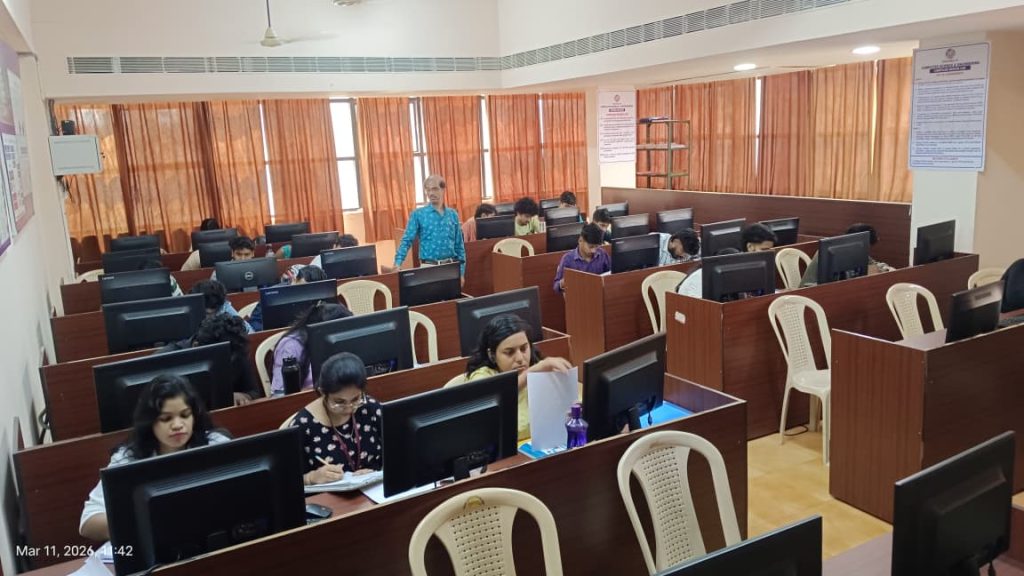
Laboratory Infrastructure

System Configuration

  • Processor: Intel(R) Core(TM) i3-10100 CPU @ 3.60 GHz
  • RAM: 8 GB
  • Storage: 256 GB SSD
  • Monitor: 18” TFT

Operating System

  • Windows 10 Education Operating System

Required Software

  • Java Development Kit (JDK)
  • NetBeans IDE / Eclipse IDE
  • Apache Tomcat Server (for Applet / Web Application support)
  • Node.js and npm (for JavaScript runtime and package management)
  • Visual Studio Code or any Code Editor
  • Git and GitHub Desktop (for version control and collaboration)
  • Postman (for API testing)
  • Google Chrome / Mozilla Firefox Web Browser

The above configuration supports the development and execution of web applications,
front-end technologies, backend programming, and deployment activities required for
the laboratory exercises and projects.

LIST OF EXPERIMENT

Module Title Lab Name Details
Introduction to Web Development with HTML, CSS, JavaScript Intro to HTML (JSFiddle) Explore the components of an HTML file including HTML markup, CSS styling, and JavaScript code.
HTML – Creating a Simple Web Page Create a web page for the fan club of IBM founder Thomas J. Watson Sr.
Unit Conversion using HTML5 Structural Elements

Create a Unit Converter web page that converts:

  • Temperature from Celsius to Fahrenheit
  • Weight from Kilograms to Pounds
  • Distance from Kilometers to Miles
CSS Basics – Styling Your Web Page

Create a webpage on the Solar System and learn to:

  • Create a basic webpage
  • Specify font family and size
  • Use colors for styling
  • Create borders
JavaScript Create an HTML form that uses JavaScript to validate user input and dynamically update webpage content.
JavaScript – Browser Console Practice JavaScript concepts using the browser console.
Simple Interest Calculator Develop a calculator by modifying HTML, CSS, and JavaScript files and verifying webpage functionality.
Single Page Portfolio Website

Create a portfolio website with sections:

  • About Me
  • Skills
  • Projects
  • Recommendations
Publish your Portfolio to GitHub Pages Publish your portfolio website using GitHub Pages static hosting service.
Getting Started with Git and GitHub GitHub Sign Up and Create Repo Create a GitHub account, create a repository, and add files using the GitHub interface.
Getting Started with Branches using Git Commands Use Git commands in a cloud IDE to create and manage branches.
Cloning and Forking GitHub Projects Learn to fork repositories, clone them locally, create branches, commit changes, and submit pull requests.
Practice Project: Overview Manage development and deployment of a shipping calculator web application using GitHub collaboration features.
Practice Project: Part 1 – GitHub UI Create repository with README, license, Code of Conduct, and Contribution Guidelines.
Practice Project: Part 2 – Git CLI Fork repository, edit code using Git CLI, add files, and submit pull request.
Final Project: Part 1 – GitHub UI Create repository, choose license, add README, Code of Conduct, Contribution Guidelines and commit files.
Developing Front-End Apps with React Content Rating Application Create a React component that allows users to like or dislike content and track ratings.
Function Component Event Planner Landing Page Create a React landing page for an event planning organization with sections for features, testimonials, and contact form.
Fetch Data Using useFetch Use React hooks (useState, useEffect) and a custom hook to fetch and display data dynamically.
Create Feedback Form for Survey Create a feedback form with validation, confirmation dialog, and submission handling using React.
Practice Project: Conference Event Planner Develop an application for selecting conference rooms, equipment, and meals for events.
Developing Back-End Apps with Node.js and Express First Server with Server-Side JavaScript Create and run a Node.js web server and access it from a client.
Promises and Callback Create a Node.js application using promise callbacks.
Async Callback Programming Understand asynchronous callbacks and implement them in Node.js.
CRUD Operations with Node.js and Express Create a Friends List application with Create, Retrieve, Update, Delete operations and test endpoints with Postman.
Express Server Create an Express server, use middleware and JWT authentication, and render static HTML pages.
Friends List Application Using Express Server with JWT Secure CRUD operations with JWT authentication and test APIs using Postman.
Book Review Application Build a server-side book review application with secure REST API using JWT authentication.

Database Engineering Lab

Course Objective

The objective of this laboratory is to provide hands-on experience in designing,
implementing, and manipulating relational databases using SQL and PL/SQL.
Students will learn database schema design, query processing, views, triggers,
procedures, joins, and transaction control statements.

System Configuration

  • Processor: Intel Core i3 / higher
  • RAM: 8 GB
  • Storage: 256 GB SSD
  • Operating System: Windows 10 / Linux

Required Software

  • Oracle Database / MySQL
  • SQL Developer / MySQL Workbench
  • Command Line SQL Client

List of Experiments

Experiment 1: Library Database

Consider the following schema:

BOOK (Book_id, Title, Publisher_Name, Pub_Year)
BOOK_AUTHORS (Book_id, Author_Name)
PUBLISHER (Name, Address, Phone)
BOOK_COPIES (Book_id, Programme_id, No_of_Copies)
BOOK_LENDING (Book_id, Programme_id, Card_No, Date_Out, Due_Date)
LIBRARY_PROGRAMME (Programme_id, Programme_Name, Address)

Tasks:

  • Retrieve details of all books in the library including title, publisher, authors and number of copies.
  • Get the borrowers who borrowed more than 3 books between Jan 2025 and Jun 2025.
  • Delete a book from BOOK table and update related tables.
  • Partition BOOK table based on publication year.
  • Create a view showing available books and number of copies.

Experiment 2: College Database

STUDENT (REGNO, SName, Address, Phone, Gender)
SEMSEC (SSID, Sem, Sec)
CLASS (REGNO, SSID)
COURSE (Subcode, Title, Sem, Credits)
IAMARKS (REGNO, Subcode, SSID, Test1, Test2, Test3, FinalIA)

  • List student details studying in 4th semester C section.
  • Compute number of male and female students in each semester and section.
  • Create a view for Test1 marks of student REGNO ‘1BP22CS101’.
  • Calculate FinalIA as average of best two tests.
  • Categorize students as Outstanding, Average, and Weak based on FinalIA.

Experiment 3: Order Database

SALESMAN (Salesman_id, Name, City, Commission)
CUSTOMER (Customer_id, Cust_Name, City, Grade, Salesman_id)
ORDERS (Ord_No, Purchase_Amt, Ord_Date, Customer_id, Salesman_id)

  • Count customers with grades above Bangalore’s average.
  • Find salesman with more than one customer.
  • List salesman with and without customers using UNION.
  • Create a view showing salesman with highest order of the day.
  • Delete salesman with id 1000 and remove all related orders.

Experiment 4: Privileges and Transactions

Tables:
Departments (dept_no, dept_name, dept_location)
Employees (emp_id, emp_name, emp_salary, dept_no)

  • Grant all privileges on employees table.
  • Grant selective privileges on employees table.
  • Revoke all privileges.
  • Revoke selective privileges.
  • Implement SAVEPOINT in transactions.

Experiment 5: SQL Joins

  • Display employee and department details using INNER JOIN.
  • Display employee name and department name using LEFT OUTER JOIN.
  • Display employee name and department name using RIGHT OUTER JOIN.
  • Display employees with salary greater than average salary.

Experiment 6: Election Commission Database

CONSTITUENCY (cons_id, csname, csstate, no_of_voters)
PARTY (pid, pname, psymbol)
CANDIDATES (cand_id, name, age, state, phone_no)
VOTER (vid, vname, vage, vaddr)

  • Find candidates contesting in more than one constituency in different states.
  • Display the state having maximum constituencies.
  • Create stored procedure to insert voter if age ≥ 18.
  • Create stored procedure to display number of voters in a constituency.
  • Create trigger to update voter count after voter insertion.

Experiment 7: Airline Flight Database

FLIGHTS (flno, distance, departs, arrives)
AIRCRAFT (aid, aname, cruisingrange)
CERTIFIED (eid, aid)
EMPLOYEES (eid, ename, salary)

  • Find pilots certified for Boeing aircraft.
  • Find aircraft that can fly non-stop from Delhi to Mumbai.
  • Find pilots certified for aircraft with range greater than 3000 miles.
  • Find employees with highest and second highest salary.
  • Find pilots certified for largest number of aircraft.
  • Find total salary paid to employees.

Experiment 8: Cursor Implementation

Employee (E_id, E_name, Age, Salary)

  • Create a cursor to extract employee records.
  • Declare variables, open cursor, fetch values, and close cursor.

Experiment 9: Stored Procedure – Student Grading

Tables:
Stud_Marks (Name, Total_Marks)
Result (Roll, Name, Class)

  • Create stored procedure proc_Grade to categorize students based on marks.
  • Use PL/SQL block to call the procedure.
  • Classify students as Distinction, First Class, and Higher Second Class.

Experiment 10: PL/SQL Fine Calculation

Borrower (Rollin, Name, Date_of_Issue, Name_of_Book, Status)
Fine (Roll_no, Date, Amt)

  • Accept Roll number and book name from user.
  • Calculate fine based on number of days after issue.
  • Update book status after submission.
  • Store fine details if applicable.
  • Use control structures and exception handling.

Computer Organization and Architecture Lab

System Configuration

  • Processor: Intel(R) Core(TM) i3-10100 CPU @ 3.60 GHz
  • RAM: 8 GB
  • Storage: 256 GB SSD
  • Monitor: 18” TFT

Operating System

  • Windows 10 Education Operating System

Required Software

  • C / C++ Compiler (GCC / Dev C++ / Turbo C)
  • Java Development Kit (JDK)
  • NetBeans IDE / Eclipse IDE
  • Apache Tomcat (for Applet / Web support if required)
  • Hardware Simulation Tools (Logisim / Proteus)
  • Microsoft Office / LibreOffice for documentation

List of Experiments

  1. Simulation and Design of Fast Multiplication and Division Programs
    Design and simulate programs that perform fast multiplication and division operations to understand arithmetic processing and algorithm efficiency in computer systems.
  2. Experiments using Hardware Training Kits
    Perform experiments using hardware training kits to study the working and interfacing of devices such as floppy disk drives, dot matrix printers, and other peripheral components.
  3. Dismantling and Assembling of a Personal Computer
    Dismantle and assemble a PC system to study internal components including connections, ports, chipsets, SMPS, and other hardware parts. Draw and label the block diagram of the motherboard and other relevant boards.
  4. Study Project on Hardware Technologies
    Undertake a study project on various hardware technologies such as memory systems, serial bus, parallel bus, microprocessors, input/output devices, and motherboard architecture.

Design and Analysis of Algorithms Lab

System Configuration

  • Processor: Intel(R) Core(TM) i3-10100 CPU @ 3.60 GHz
  • RAM: 8 GB
  • Storage: 256 GB SSD
  • Monitor: 18” TFT

Operating System

  • Windows 10 Education Operating System

Required Software

  • C / C++ Compiler (GCC / Dev C++ / Turbo C++)
  • Java Development Kit (JDK)
  • NetBeans IDE / Eclipse IDE
  • Graph Plotting Tools (GNU Plot / Excel / Python Matplotlib for analysis)
  • Microsoft Office / LibreOffice for documentation

List of Experiments

  1. Selection Sort
    Sort a given set of n integer elements using the Selection Sort method and compute its time complexity. Run the program for varied values of n > 5000 and record the time taken to sort. Plot a graph of time taken versus n. The elements can be generated using a random number generator or read from a file. Demonstrate the brute force technique and analyze its worst case, average case, and best case time complexity.
  2. Quick Sort
    Sort a given set of n integer elements using the Quick Sort method and compute its time complexity. Run the program for varied values of n > 5000 and record the time taken to sort. Plot a graph of time taken versus n. Demonstrate the divide-and-conquer technique and analyze its worst case, average case, and best case time complexity.
  3. Merge Sort
    Sort a given set of n integer elements using the Merge Sort method and compute its time complexity. Run the program for varied values of n > 5000 and record the time taken to sort. Plot a graph of time taken versus n. Demonstrate the divide-and-conquer technique with analysis of worst case, average case, and best case complexities.
  4. Greedy Method – Knapsack Problem
    Write a program to solve the Knapsack problem using the Greedy approach and demonstrate the selection of items based on maximum profit and weight constraints.
  5. Dijkstra’s Algorithm
    Write a program to find the shortest path from a given vertex to all other vertices in a weighted connected graph using Dijkstra’s algorithm.
  6. Kruskal’s Algorithm
    Write a program to find the Minimum Cost Spanning Tree (MCST) of a connected undirected graph using Kruskal’s algorithm with Union-Find techniques.
  7. Prim’s Algorithm
    Write a program to find the Minimum Cost Spanning Tree (MCST) of a connected undirected graph using Prim’s algorithm.
  8. Dynamic Programming Problems
    • Write a program to solve the All-Pairs Shortest Path problem using Floyd’s algorithm.
    • Write a program to solve the Travelling Salesperson Problem using Dynamic Programming.
    • Write a program to solve the 0/1 Knapsack problem using Dynamic Programming.
  9. Subset Sum Problem
    Design and implement a C++/Java program to find a subset of a given set S = {S1, S2, …, Sn} of positive integers whose sum is equal to a given positive integer d. Display all possible solutions or show a message if no solution exists.
  10. Hamiltonian Cycle
    Design and implement a program to find all Hamiltonian cycles in a connected undirected graph using the Backtracking technique.

Advanced Programming Lab

System Configuration

  • Processor: Intel(R) Core(TM) i3-10100 CPU @ 3.60 GHz
  • RAM: 8 GB
  • Storage: 256 GB SSD
  • Monitor: 18” TFT

Operating System

  • Windows 10 Education Operating System

Required Software

  • Python (Anaconda / Python 3.x)
  • Jupyter Notebook / Google Colab
  • Python Libraries: NumPy, Pandas, Matplotlib, Seaborn
  • Machine Learning Libraries: Scikit-Learn
  • Deep Learning Libraries: TensorFlow / Keras / PyTorch
  • IDE: VS Code / PyCharm / Jupyter Notebook

List of Experiments

The following programs may be implemented using real-time datasets or synthetic datasets in Python.

  1. Linear Regression
    Write a Python program to implement Linear Regression and analyze the relationship between dependent and independent variables.
  2. Logistic Regression
    Develop a Logistic Regression model and evaluate its performance using appropriate classification metrics.
  3. K-Means Clustering
    Write a program to implement K-Means clustering and visualize the clusters using appropriate plotting techniques.
  4. Decision Tree Classifier
    Explain and implement a Decision Tree Classifier and analyze its performance on a dataset.
  5. Naive Bayes Classification
    Write a Python program to implement Naive Bayes classification and evaluate the prediction results.
  6. Support Vector Machine (SVM)
    Implement a Support Vector Machine classifier and discuss the classification results.
  7. k-Nearest Neighbors (k-NN)
    Write a program to implement the k-NN algorithm and analyze its performance for classification tasks.
  8. Gradient Boosting
    Write a program to implement the Gradient Boosting algorithm and evaluate its predictive performance.
  9. Convolutional Neural Network (CNN)
    Write a program to implement a CNN model using an image dataset for image classification.
  10. Model Comparison using Synthetic Data
    Write a program to generate synthetic data, apply multiple machine learning algorithms, and compare the performance of the models using appropriate evaluation metrics.

Theory of Computation Lab

System Configuration

  • Processor: Intel(R) Core(TM) i3-10100 CPU @ 3.60 GHz
  • RAM: 8 GB
  • Storage: 256 GB SSD
  • Monitor: 18” TFT

Operating System

  • Windows 10 Education Operating System

Required Software / Tools

  • JFLAP (Java Formal Languages and Automata Package)
  • Java Development Kit (JDK)
  • NetBeans IDE / Eclipse IDE (optional)
  • Text Editor or IDE for documentation

List of Experiments

  1. Introduction to Automata Simulation Tools
    • Installation and familiarization with automata simulation tools such as JFLAP.
    • Perform basic operations such as creating and running simple finite automata.
  2. Design and Simulation of Deterministic Finite Automata (DFA)
    • Construct DFA for given regular languages.
    • Validate the DFA by testing various input strings for acceptance or rejection.
  3. Design and Simulation of Non-Deterministic Finite Automata (NFA)
    • Construct NFA for various regular languages.
    • Convert the designed NFA into an equivalent DFA and analyze the results.
  4. NFA with ε-transitions
    • Design an NFA with epsilon (ε) transitions for given regular expressions.
    • Convert the ε-NFA to an equivalent DFA.
  5. Finite Automata with Output (Moore and Mealy Machines)
    • Design Moore and Mealy machines for specific output requirements.
    • Convert a Mealy machine into a Moore machine and vice versa.
  6. Context-Free Grammar (CFG) Design
    • Design CFGs for various context-free languages.
    • Parse strings using the grammar and generate corresponding parse trees.
  7. Pushdown Automata (PDA) Simulation
    • Design a PDA for specific context-free languages.
    • Simulate PDA operation using acceptance by final state and acceptance by empty stack.
  8. Turing Machine Design
    • Design and simulate a Turing machine to perform basic mathematical operations such as addition and subtraction.
    • Test the Turing machine with various input strings and observe its behavior.

Operating Systems Lab

System Configuration

  • Processor: Intel(R) Core(TM) i3-10100 CPU @ 3.60 GHz
  • RAM: 8 GB
  • Storage: 256 GB SSD
  • Monitor: 18” TFT

Operating System

  • Windows 10 Education Operating System
  • Linux Distribution (Ubuntu / Fedora / CentOS)

Required Software

  • GCC Compiler for C Programming
  • Linux Terminal / Bash Shell
  • Android Studio for Mobile Application Development
  • Text Editor / IDE (VS Code / Code::Blocks / Sublime Text)

List of Experiments

  1. Installation of Operating System
    Install and configure an operating system (Linux/Windows) and study the basic system environment.
  2. Linux Administrative Commands
    Practice common Linux administrative commands for file management, process monitoring, and system administration.
  3. UNIX Shell Programming
    Write and execute shell scripts to automate basic system tasks and operations.
  4. Process Management using System Calls
    Write programs demonstrating system calls such as fork(), exit(), getpid(), wait(), and close().
  5. Synchronization Problems
    Implement classical synchronization problems such as Dining Philosophers, Cigarette Smokers, or Sleeping Barber problems.
  6. CPU Scheduling Algorithms
    Simulate CPU scheduling algorithms such as First Come First Serve (FCFS), Round Robin (RR), and Shortest Job First (SJF).
  7. Banker’s Algorithm
    Simulate Banker’s Algorithm for deadlock avoidance and analyze system resource allocation.
  8. Page Replacement Algorithms
    Write programs to simulate page replacement algorithms such as FIFO, LRU, and Optimal.
  9. Thread Programming
    Write C programs to implement multithreading and demonstrate concurrent execution.
  10. Paging Scheme Implementation
    Implement a paging scheme using C programming to demonstrate memory management techniques.
  11. Memory Allocation Methods
    Write C programs to implement memory allocation techniques:

    • First Fit
    • Worst Fit
    • Best Fit
  12. Android Programming
    Develop a basic Android mobile application to understand mobile operating system concepts.

Machine Learning Lab

System Configuration

  • Processor: Intel(R) Core(TM) i3-10100 CPU @ 3.60 GHz
  • RAM: 8 GB
  • Storage: 256 GB SSD
  • Monitor: 18” TFT

Operating System

  • Windows 10 Education Operating System
  • Linux (Ubuntu) – optional for development

Required Software / Tools

  • Python 3.x
  • Anaconda Distribution
  • Jupyter Notebook / Google Colab
  • Python Libraries: NumPy, Pandas, Matplotlib, Seaborn
  • Machine Learning Libraries: Scikit-learn
  • Deep Learning Libraries: TensorFlow / PyTorch
  • IDE: VS Code / PyCharm / Jupyter Notebook

Lab Assignments

  1. Introduction to Python Programming
    • Install Python and set up Anaconda.
    • Write basic Python scripts including loops, conditional statements, and functions.
  2. Introduction to Machine Learning Libraries using Python
    • Overview of commonly used libraries for machine learning and data analysis.
  3. Working with NumPy, Matplotlib, and Pandas
    • NumPy: Perform matrix operations, loops, and conditional computations.
    • Matplotlib: Create and customize plots and visualizations.
    • Pandas: Load, explore, and summarize datasets.
  4. Statistical Analysis using Python
    Write a Python program to find the mean, median, mode, variance, and standard deviation of a list of numbers.
  5. Overview of Machine Learning Frameworks
    Study the features and applications of Scikit-learn, TensorFlow, and PyTorch libraries.
  6. Linear Regression
    Implement the Linear Regression algorithm using Python.
  7. Logistic Regression
    Implement the Logistic Regression algorithm for classification tasks.
  8. k-Nearest Neighbors (k-NN)
    Implement the k-NN algorithm and analyze classification results.
  9. Decision Tree
    Implement the Decision Tree algorithm for classification or prediction.
  10. Random Forest
    Implement the Random Forest algorithm and evaluate model performance.
  11. Support Vector Machine (SVM)
    Implement the Support Vector Machine algorithm for classification tasks.
  12. Principal Component Analysis (PCA)
    Implement PCA for dimensionality reduction and visualization of datasets.
  13. K-Means Clustering
    Implement the K-Means clustering algorithm to group similar data points.

Real-World Applications

  • Image Classification
  • Text Classification
  • Regression Problems (e.g., Housing Price Prediction)

Project for Product Development Lab

System Configuration

  • Processor: Intel(R) Core(TM) i3-10100 CPU @ 3.60 GHz
  • RAM: 8 GB
  • Storage: 256 GB SSD
  • Monitor: 18” TFT

Operating System

  • Windows 10 Education Operating System

Required Software / Tools

  • Microsoft Office / LibreOffice for documentation and presentations
  • Project Management Tools (MS Project / Trello / Asana)
  • Data Analysis Tools (Excel / Google Sheets / Python-based tools)
  • Presentation Tools (PowerPoint / Google Slides)
  • Internet and Market Research Tools

Instruction Methodology

The course is organized as an independent project-based learning activity conducted in teams of
4–5 students. Each team is responsible for developing a product idea from concept to a
stage where it is ready for potential market launch for a specific organization or business context.

The project work is supported by methodological lectures that introduce frameworks, tools,
and techniques used in modern product development and innovation management.

Throughout the course, the project is presented during a series of seminars where peer groups
act as opponents and evaluate the progress of the project. These presentations function as
“control gates” that help monitor the development process and ensure the project is progressing
towards a feasible and market-ready solution.

The course concludes with a final seminar presentation, where the project team presents
their developed product concept and supporting analysis. Based on the evaluation and discussion,
a decision is made regarding whether the product is suitable for launch or requires further development.

Compiler Design Lab

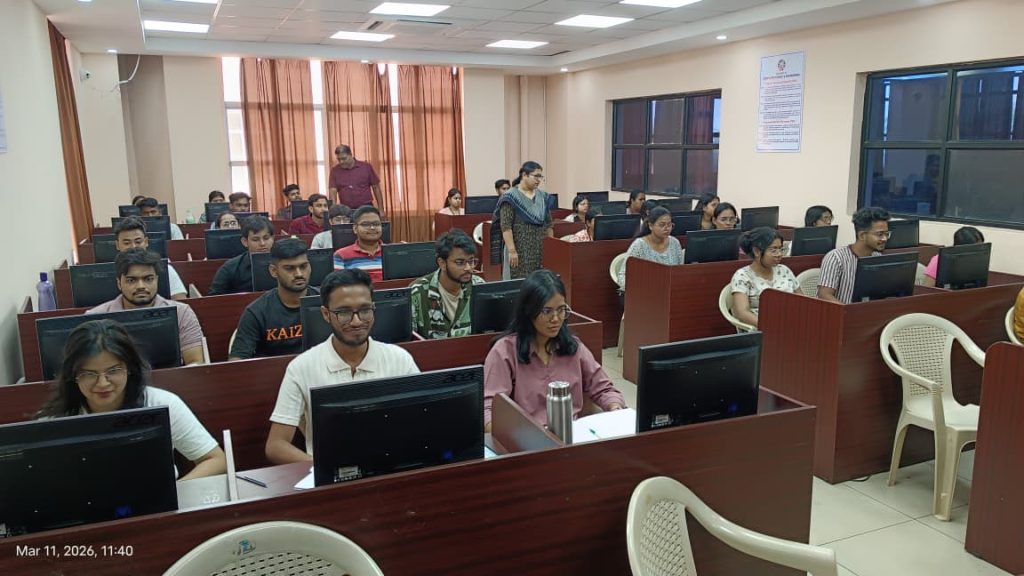
System Configuration

  • Processor: Intel(R) Core(TM) i3-10100 CPU @ 3.60 GHz
  • RAM: 8 GB
  • Storage: 256 GB SSD
  • Monitor: 18” TFT

Operating System

  • Windows 10 Education Operating System
  • Linux Distribution (Ubuntu / Fedora / CentOS) for compiler tools

Software Requirements

  • LEX / FLEX (Lexical Analyzer Generator)
  • YACC / Bison (Parser Generator)
  • GCC (C Compiler)
  • Linux Environment or Compatible Terminal Emulator (Cygwin / Ubuntu WSL)
  • Text Editor / IDE (VS Code / Sublime Text / Vim)

List of Experiments

  1. Implementation of Lexical Analyzer using LEX
    • Tokenization of a simple program.
    • Handling identifiers, keywords, numbers, and operators.
  2. Design of Syntax Analyzer using YACC
    • Parsing arithmetic expressions.
    • Parsing conditional and looping constructs such as if-else and while statements.
  3. Removing Left Recursion and Left Factoring
    • Manual implementation of algorithms for eliminating left recursion and left factoring in grammars.
  4. Implementation of Predictive Parser (LL(1))
    • Construct parsing table and simulate the parsing process.
  5. Implementation of Shift-Reduce Parser
    • Simulate stack operations used in shift-reduce parsing.
  6. Syntax Directed Translation
    • Construction of Abstract Syntax Trees (AST) for expressions.
  7. Intermediate Code Generation
    • Generate three-address code for arithmetic expressions.
    • Implement backpatching for boolean expressions and control flow statements.
  8. Design and Implementation of Symbol Table
    • Implement operations such as insertion, lookup, and scope management.
  9. Implementation of Type Checking and Type Conversion
  10. Basic Code Optimization Techniques
    • Constant folding.
    • Dead code elimination.
    • Strength reduction.
  11. Simulation of Runtime Environment
    • Activation record structure.
    • Stack management for function calls.
  12. Mini Project: Development of a Simple Compiler
    • Design a compiler for a subset of a programming language.
    • Integrate lexical analysis, syntax analysis, and intermediate code generation phases.

Software Engineering Lab

System Configuration

  • Processor: Intel(R) Core(TM) i3-10100 CPU @ 3.60 GHz
  • RAM: 8 GB
  • Storage: 256 GB SSD
  • Monitor: 18” TFT

Operating System

  • Windows 10 Education Operating System
  • Linux Distribution (Ubuntu) – optional

Required Software / Tools

  • UML Modeling Tools (StarUML / Visual Paradigm / Lucidchart)
  • Diagram Design Tools (Draw.io / Creately)
  • Project Management Tools (MS Project / Trello)
  • Testing Tools (Selenium / JUnit / TestNG or other open-source testing tools)
  • Documentation Tools (MS Word / Google Docs)

List of Experiments

  1. Analysis and Identification of Suitable Process Models
    Study and analyze different software process models such as Waterfall, Spiral, Agile, and Incremental models and identify the appropriate model for a given problem.
  2. Work Breakdown Structure (WBS) and Estimation
    Develop Work Breakdown Structures based on:

    • Process-Based Structure
    • Product-Based Structure
    • Geographic-Based Structure
    • Role-Based Structure

    Perform project estimation based on the selected WBS.

  3. Requirement Modeling – Structural Modeling
    Develop an Entity Relationship (ER) Diagram to represent the structural aspects of the system.
  4. Requirement Modeling – Functional Modeling
    Develop Context Flow Diagrams and Data Flow Diagrams (DFD) to represent system functionality.
  5. Requirement Modeling – Behavioral Modeling
    Create State Transition Diagrams to illustrate system behavior and state changes.
  6. Object-Oriented Design – Use Case and Class Models
    Design UML diagrams including Use Case Diagrams and Class Diagrams for the system.
  7. Object-Oriented Design – Interaction Models
    Develop interaction diagrams such as Sequence Diagrams and Communication Diagrams.
  8. Object-Oriented Design – Architectural Models
    Create Package Diagrams, Component Diagrams, and Deployment Diagrams to represent system architecture.
  9. Software Testing
    Design and demonstrate test cases including:

    • Functional Testing
    • Non-Functional Testing

    using open-source testing tools.

  10. Storyboarding and User Interface Design
    Design storyboards and user interface models to represent the layout, navigation, and user interaction flow of the system.